Reasons why dog owners dislike being alone: Understanding the underlying causes and effective solutions.
Dogs often exhibit behaviors like staring out the window or sitting by the door, seemingly watching your fingers as you leave. "Why do they get sad every time I leave?" Many dog owners wonder this. Often, the root of problem behaviors like barking, destructive behavior, or simply curling up and refusing to eat is separation anxiety.
This article addresses a common concern for dog owners: why dogs dislike being alone. It provides practical solutions based on real-life examples and comparison points, offering actionable advice for improving your dog's well-being.
---
Why Do Dogs Get Anxious When Left Alone?
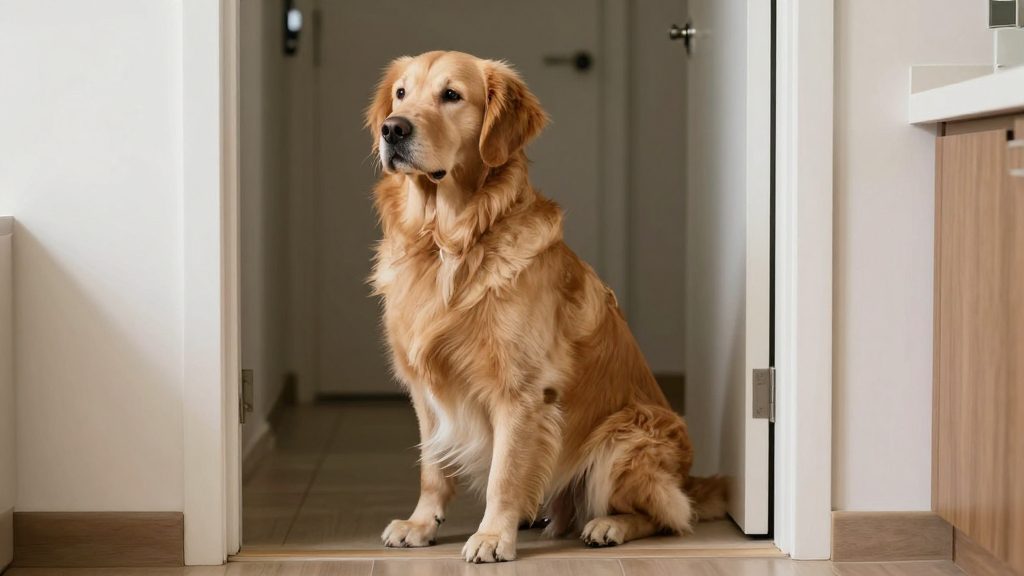
Unlike humans, dogs have a limited sense of long-term time perception. They don't understand that if you leave at 10 AM, you'll be back in 3 hours. Instead, they experience a survival response: "If you're gone, I'm in danger." This is especially true for dogs with shorter lifespans or those who were adopted at a young age.
---
Signs of Stress in Dogs:
* Sitting by the door, staring out: Awaiting your return. * Jumping up at the sound of the door closing, mistaking it for your departure: Triggering a strong fear response. * Whining, crying, or excessive barking: A sign of a racing heart and anxiety. * Refusing to eat or having occasional accidents: Physical manifestations of stress.
If you observe one or more of these behaviors, your dog's reaction to being alone is likely intensifying.
---
How to Reduce Fear:
1. Start with Short Separations:
Begin by teaching your dog to tolerate being alone, starting with very short periods. "I'm just going out for a minute and will be right back."
* Real-life example: A 3-year-old Miniature Poodle owner was frustrated because the dog would run out the door, dig in the dirt, and make a mess whenever they left for work. * Solution: The owner started writing in a journal, "Today, I'm just going out for 1 minute," and then immediately returning. * Result: After 2 weeks, the dog started following the owner to the door and seemed to say, "Can I come too?" After 3 weeks, the dog was able to tolerate being alone for up to 10 minutes.
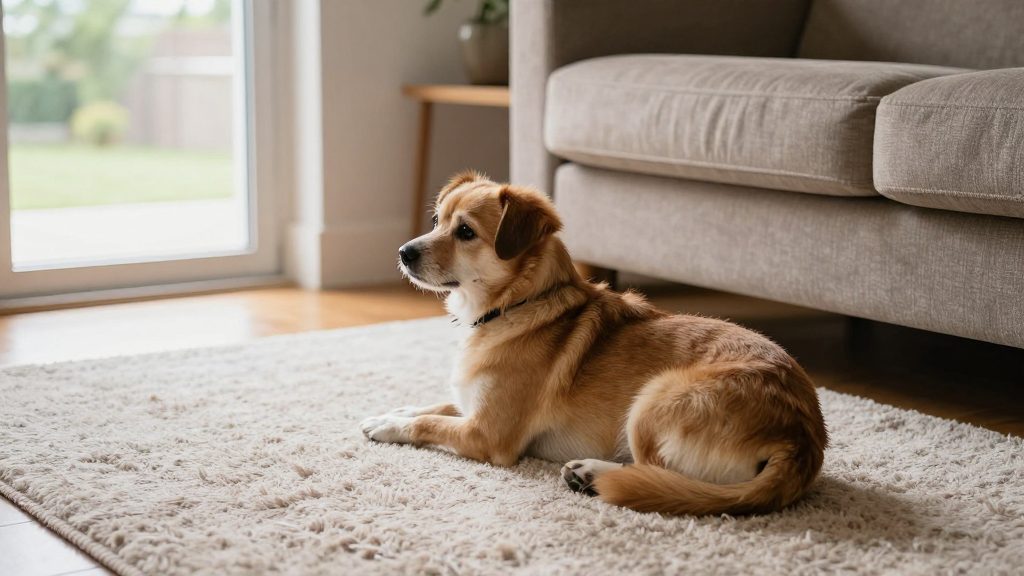
Key takeaway: It's not the "separation" itself that causes anxiety, but rather the negative association with your departure behavior. By creating a positive experience with short separations, you can help your dog learn that being alone is safe.
---
2. Turn "Alone Time" into a "Game Time":
Instead of focusing on the fact that you're leaving, help your dog associate being alone with something enjoyable.
* Real-life example: An 8-month-old Pomeranian would hide under the bed and chase its tail whenever the owner said, "I'm just stepping out for a moment." * Solution: The owner would leave a treat-dispensing toy on the table as soon as they left and say, "I'll be back in 3 minutes to help you open it." * Result: Initially hesitant, the dog eagerly attacked the toy when the owner returned after 3 minutes. Eventually, the dog started anticipating the treat-dispensing toy as soon as the door closed.
Key takeaway: Giving your dog something to do while you're gone can shift their focus from anxiety to anticipation. Treat-dispensing toys, chew bones, and hidden treats are all effective options.
---
3. Change Your Departure Routine:
Dogs can become overly sensitive to your "getting ready to leave" behaviors. Altering these routines can make a big difference.
* Old habit: Putting on your coat, putting on shoes, grabbing keys – all signals that you're about to leave. * New strategy: Leaving your coat on the bed, keeping your shoes in a closet out of sight – these actions signal that you're not actually leaving.
* Real-life example: A 10-month-old Dalmatian would sit by the door and whine as soon as the owner put on their shoes. * Solution: The owner started leaving a toy by the door and saying, "I'm just going outside to play for a few minutes," before closing the door. * Result: After a week, the dog stopped reacting to the owner putting on their shoes.
Key takeaway: Changing the "narrative" of your departure is crucial. Instead of signaling a permanent absence, you're communicating that you're just stepping out for a short time.
---
4. Gradually Increase Alone Time:
Once your dog can tolerate being alone for a few minutes, gradually increase the duration.
* Start with 1 minute, then 3 minutes, then 5 minutes, then 10 minutes, and so on. * Reward successful periods with a treat or a favorite toy. * You can also try calling your dog or leaving a recorded message (using a familiar voice).
* Real-life example: A 12-month-old Corgi owner was able to reduce the dog's anxiety from 5 minutes to being comfortable alone for 30 minutes after just 2 weeks of gradual training. * Result: The dog's destructive behavior decreased by 90%, and the dog was able to remain calm and relaxed while the owner was away.
---
🔍 Practical Checklist: (Remember These Key Points)
* Start with short separations to reduce pressure. * Provide predictable signals for both departures and returns. * Transform "alone time" from a source of fear to an opportunity for play. * Focus on repetition and positive experiences rather than solely increasing the duration of alone time.
---
Ultimately, a dog's dislike of being alone isn't about a lack of trust. It's often due to a mismatch in your behavior patterns and their understanding of time. Your dog knows you're leaving, but they may not understand the duration or reason for your absence. This can trigger a fear response. However, by being patient, consistent, and focusing on small successes, you can help your dog learn that being alone is okay.
Small changes can make a big difference in your dog's well-being. > Start today by leaving for just 1 minute. When you return, say, "I saw that you were being a good boy/girl while I was gone."
Related posts
Essential for Dog Owners: How to Calculate Your Dog's Age and 5 Key Stages of Their Life Cycle.
Reasons why cats shouldn't open refrigerators: Understanding the risks of food for pets, and safety standards illustrated through real-life examples.
Cat and dog communication breakdown? Four realistic problems faced by "dogs that act like humans."
5 Key Things to Check When Preparing Your Dog's Lunch.
Popular posts
Essential for Dog Owners: How to Calculate Your Dog's Age and 5 Key Stages of Their Life Cycle.
Reasons why cats shouldn't open refrigerators: Understanding the risks of food for pets, and safety standards illustrated through real-life examples.
Cat and dog communication breakdown? Four realistic problems faced by "dogs that act like humans."
Comments 0