Cat and dog communication breakdown? Four realistic problems faced by "dogs that act like humans."
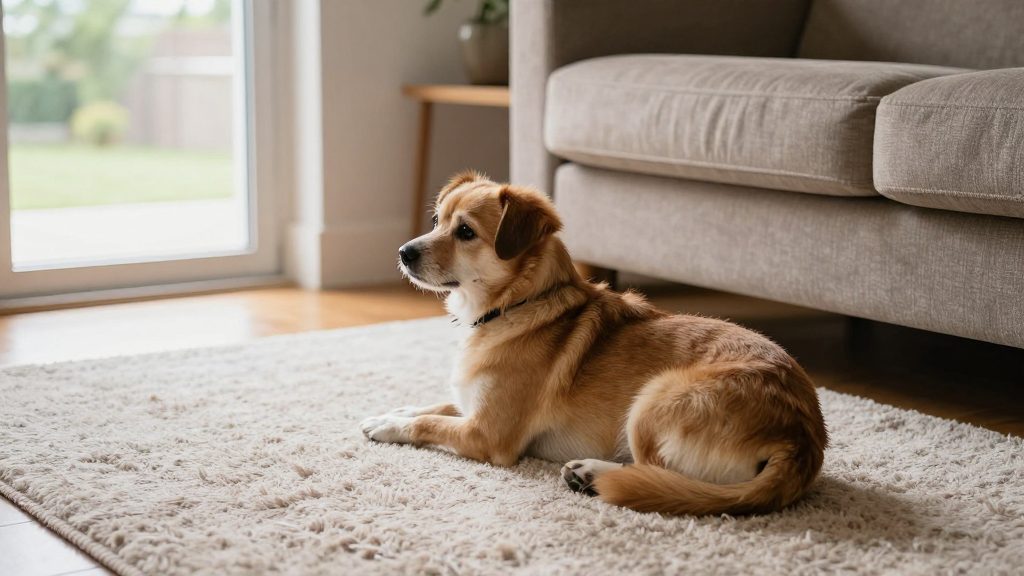
Our dog, Steve, always tries to act like a human. When the family eats bread, he circles under the table, whining and begging with his eyes, and listens intently to the conversations on TV. Even during vet checkups, he sits still and tries to appear calm, as if saying, "Yes, I'm doing well." However, the problem is that Steve's efforts to act like a human actually create a barrier to communication. Sometimes, our cat, "Linky," will see Steve and immediately stand up, turn away, or tilt her ears back in a threatening posture. This suggests that it's not just a matter of different personalities, but rather a pattern of behavior that is causing problems.
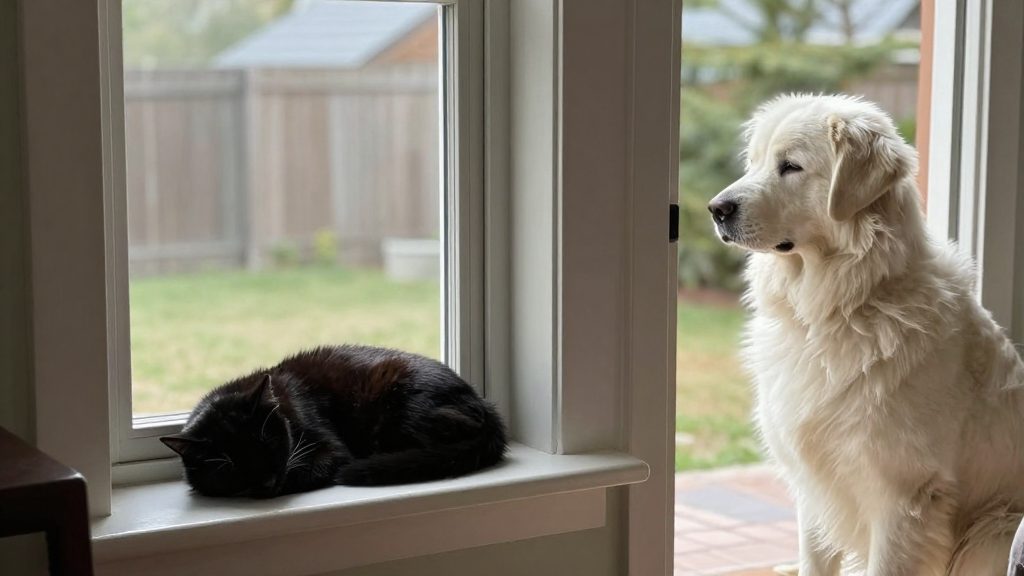
For dogs and cats to coexist, it requires more than just living together; it demands intelligent interaction where they interpret and respond to each other's behavior. However, a dog's habit of acting like a human can easily clash with a cat's physiological and psychological responses. Cats typically have a clear understanding of their space and rely on predictable behavior patterns to assess risk. In contrast, a dog's attempts to appear human are often inconsistent and unpredictable. This makes it difficult for cats to understand the dog's intentions, leading them to become more cautious.
---
Why is a dog's habit of acting like a human dangerous for cats?
Dogs that try to act "human" typically exhibit three characteristics: - They follow the gaze of humans and wait silently. - They sit or lie down in a human-like posture, signaling that they are "calm and well-behaved." - They expect a reaction solely through their eyes, without making any sound.
These behaviors are learned by the dog in an attempt to gain "human love" or "approval." However, cats interpret these signals differently. A cat's brain trusts stillness more than movement. The reason a cat might perceive a dog's silence and stillness as a "dangerous dead end" is because, in the wild, a stationary creature is often seen as a precursor to an enemy. In other words, "stillness" for a cat usually means "a predator is preparing to attack." A dog's posture of silently sitting and being still can easily be misinterpreted by a cat as a signal that "something is about to happen."
---
Does a 'quiet' dog trigger more aggression in cats?
People often think that if a cat is scared, it will "run away." However, this isn't always the case. A cat is more likely to exhibit threatening behavior towards a 'quiet' dog because the cat can't interpret the dog's silence.
- For example, if a dog sits quietly with its arms crossed, and a cat approaches, the dog remains still. This behavior can appear as an unpredictable threat to the cat.
- On the other hand, if a dog suddenly jumps or attacks, it's a clear signal to the cat that "an attack is about to happen." In this case, the cat's defensive actions, such as extending its claws or kicking with its hind legs, are more likely to be effective.
In other words, a 'quiet' dog can seem more dangerous to a cat because its behavior is unpredictable and lacks clear rules. The cat might perceive the dog as being "calmly threatening" rather than simply being harmless.
---
Why is it a problem for a dog to "act like a human"?
The core reason why a dog's behavior is perceived as a "threat" to a cat lies in the different origins of their behaviors. - A dog that acts like a human is doing so because it "wants to please the humans." - A cat acts in a certain way because it "doesn't want to be seen by others."
In other words, a dog acts based on a human-centric understanding that "if I act like a human, things will be better." However, a cat's primary response is a primitive defense mechanism: "I don't want to be seen by you." Therefore, the effort to show a cat that "sitting is good" can actually increase the cat's stress.
Furthermore, when a dog adopts a silent and stationary posture, the cat might sense a potential threat lurking beneath that stillness. Cats are naturally inclined to be able to move quickly, so a dog's fixed posture can be interpreted as a signal that "something is about to grab me."
---
What should you do instead of trying to make your dog "act like a human" for the sake of cats?
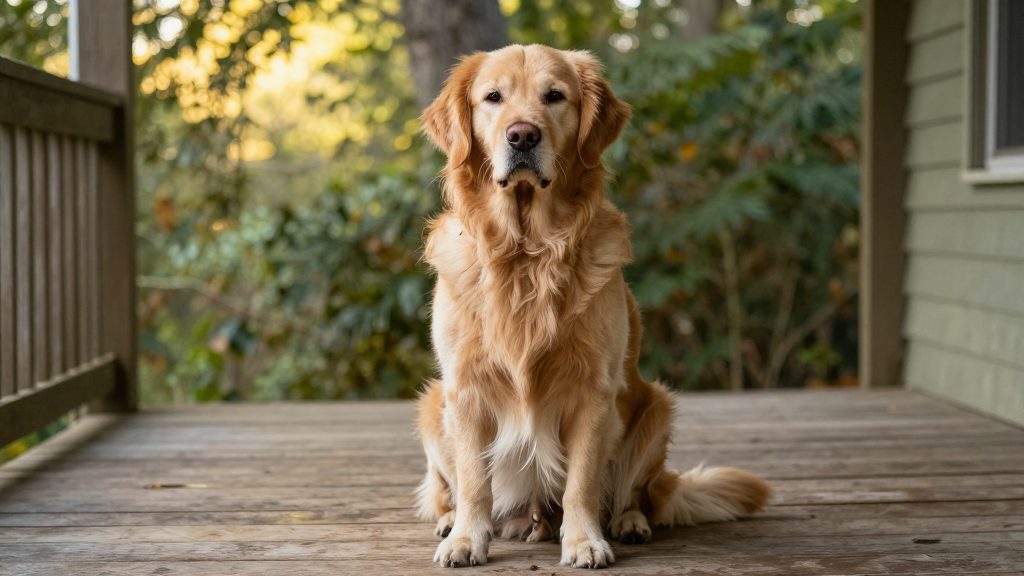
The biggest mistake is trying to "make the dog act like a human." For a dog to get along with a cat, it needs to abandon the idea of "acting like a human" and instead focus on communicating with the cat in its own language.
- Cats are most likely to react when their space is being invaded. Therefore, if a dog approaches the cat's food bowl or bed, the cat will react quickly.
- The dog's behavior should be "predictable, consistent, and in a form that the cat can understand." For example, if the dog wants to approach the cat, it's more effective to slowly approach without touching the cat and without making any sudden movements, rather than simply walking up to the cat.
- If a cat has already taken a "defensive" posture, the dog should stop and remain still for 1-2 seconds. This "period of stillness" signals to the cat that "I'm not a threat, I won't hurt you."
By practicing these behaviors, the cat will gradually come to see the dog as "another living being" rather than a threat. Many pet professionals explain that **to prevent a dog from being perceived as a threat to a cat, the dog's behavior needs to be more "predictable and calm."
---
Practical solutions: Making a dog's behavior harmless to cats.
- Instead of "sitting like a human," learn the skill of "maintaining distance from cats."
- - Don't sit down automatically when you want to approach the cat.
- - Slowly approach from a direction where the cat can see you, avoiding approaching directly in front of or behind the cat.
- - If the cat shows signs of being uncomfortable, such as "backing away or raising its fur," immediately stop and wait for at least 10 seconds before moving again.
- Switch to a "visual language" that responds to the cat's movements.
- - Instead of trying to show the cat "I like you, hello" with your eyes, avoid slowly approaching the cat with your paws.
- - When the cat approaches, the dog should observe the cat's posture and remain still without reacting.
- Establish "behavioral rules" for shared spaces.
- - Designate specific times and areas where the dog is not allowed to enter the spaces that the cat frequently uses (e.g., bed, windowsill).
- - This provides the cat with "time and space that are just for them," which can also help the dog understand the rules.
- Correct the way a dog "looks" at a cat.
- - Set boundaries to prevent the dog from perceiving the cat as an "enemy," and then practice the act of "looking" at the cat.
- - For example, when the cat is present, the dog should look at the cat but avoid tilting its head or approaching. This signals to the cat that "I'm looking at you, but I'm not a threat."
---
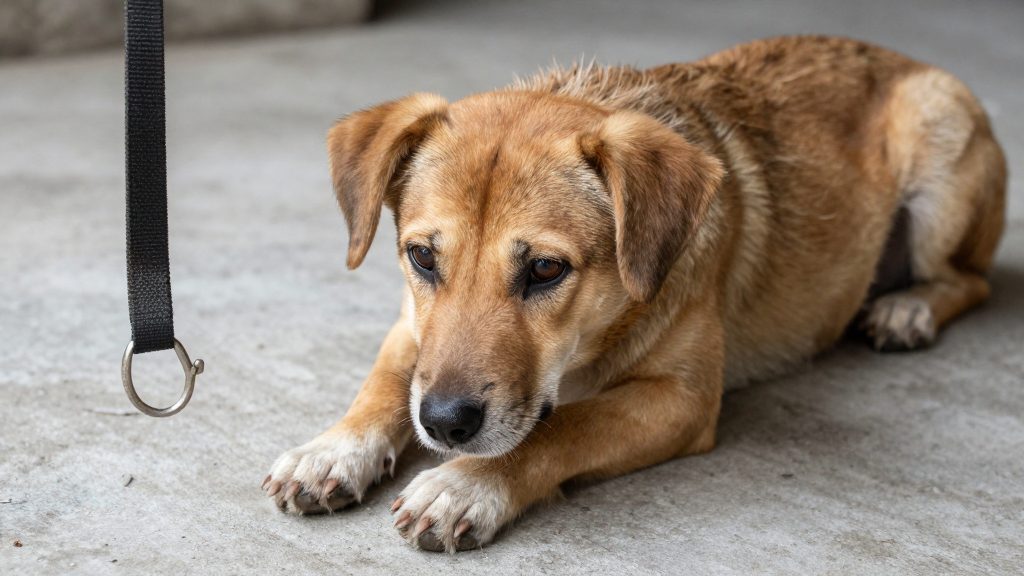
All of these actions are aimed at preventing the dog from trying to "act like a human." Cats don't understand why a dog is trying to act like them. Instead, they perceive the dog's stillness and silence as a "potential threat." Therefore, what we need to do is encourage the dog to be more "dog-like." Coexistence between cats and dogs doesn't mean achieving "perfect harmony." It means redesigning the dog's behavior patterns so that it can respond to the cat's language.
Practical advice: A dog that "doesn't act like a human" is more likely to succeed with cats than a dog that does. The key is simple: be quiet, be predictable, and wait for the cat to react. This small change in habits can completely transform the atmosphere in your home.
Related posts
Essential for Dog Owners: How to Calculate Your Dog's Age and 5 Key Stages of Their Life Cycle.
Reasons why cats shouldn't open refrigerators: Understanding the risks of food for pets, and safety standards illustrated through real-life examples.
Reasons why dog owners dislike being alone: Understanding the underlying causes and effective solutions.
5 Key Things to Check When Preparing Your Dog's Lunch.
Popular posts
Essential for Dog Owners: How to Calculate Your Dog's Age and 5 Key Stages of Their Life Cycle.
Reasons why cats shouldn't open refrigerators: Understanding the risks of food for pets, and safety standards illustrated through real-life examples.
Reasons why dog owners dislike being alone: Understanding the underlying causes and effective solutions.
Comments 0